Search

  • Technical Guidance

    MEWP-specific safe-use plan

    What is a MEWP-specific safe-use plan and why do I need to use one?

  • IPAF’s new International Safety Committee (ISC) has been convened for the first time, to assist in globalising standards development and implementation, and promoting awareness about industry safe practice.

  • Are you a Health & Safety Manager, Supervisor or Officer, or do you work in another safety role concerning the use of powered access and general issues with work at height?

    If so, becoming an IPAF member in this new category is especially for you and is a great way for you to stay up-

  • The IPAF Operators’ Safety Guide for Mobile Elevating Work Platforms (also known as Aerial Work Platforms) is a pocket-size publication that sets out the recommended working practices for the safe operation of MEWPs/AWPs over a wide range of applications, from initial checks, through transport and positioning on site, to carrying out the required tasks.

  • 5857: Is it necessary for a ground-based person (designated to help lower the MEWP in an emergency) to hold an IPAF PAL Card?

    It is preferable for any nominated MEWP ground rescue person to have undergone some form of formal training relevant to the task. However, all nominated MEWP ground rescue persons should, as a minimum, have been familiarised with the MEWP being used and the rescue procedures in place, in order that they are competent to lower the MEWP platform using the ground/emergency controls in the work situations to which they are exposed.

    Further information on rescue procedures can be found in the Best Practice Guidance for MEWPs on Avoiding Trapping/Crushing Injuries.

  • 5841: Is it appropriate to exit the MEWP platform when working at height?

    No, unless a rigorous risk assessment carried out as part of planning the job indicates that this is the safest and most effective means of accessing a particular location, taking into account the availability on site of other more suitable access equipment and the practicability of providing the same within the required timescales for the task to be carried out.

    See IPAF's technical guidance E2 on exiting the platform at height and this extract from BS 8460 (the British Standard on “Safe use of MEWPs – Code of practice”) on the subject.

  • Don’t forget to report all accidents and near misses involving powered access into the IPAF Accident Reporting Portal or report anonymously through IPAF’s ePAL app.

  • Riwal has become the latest Sustaining Member of IPAF, making it the first rental and training company on a list that includes Alimak, AON, APEX and Haulotte.

  • A Global Safety Report created using the latest analysis of data gathered in IPAF’s incident reporting project and an overview of MEWPs for Managers training will be among the key pieces of technical guidance and safety information available on the IPAF stand at the A+A Trade Fair & Congress 26-29 October in Düsseldorf, Germany.

  • As part of its Women in Powered Access initiative, IPAF has created a mentoring scheme for women in the powered access Industry who are looking for extra support and guidance to sustain and promote their career within. 

  • Featured Campaign

    Stop Overturns!

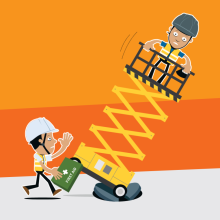
    MEWP overturn incidents often result in serious injuries or fatalities. Instability leading to overturn is commonly among the top four causes of lost time incidents (LTIs) annually, according to global data.

    Stop Overturns - Website header
  • Putting up and removing seasonal decorations can quickly turn into a festive hangover if those tasked with the work do not know how to select the correct type of MEWP, overlook the need to use professionally trained operators and supervisors, or if they try to save time or money by not following safe working practices, IPAF has warned.

  • The International Powered Access Federation (IPAF) is pleased to announce the appointment of Cameron Reid as the new Chair of the Mast Climbing Work Platforms (MCWP) & Hoist International Committee. In his new role, Reid will lead IPAF’s mission to promote the safe and effective use of Mast Climbing Work Platforms and Construction Hoists worldwide through technical expertise, guidance, and training to meet industry standards and regulations.

  • To comply with international and regional safety standards, Mobile Elevating Work Platforms (MEWPs) are fitted with platform and ground controls as well as emergency/auxiliary lowering systems.

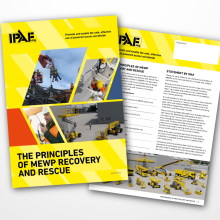
    Employers and users must develop a documented recovery and rescue plan that is specific to the task, the MEWP being used and the site. The plan should outline the procedures for executing emergency operations required to recover and rescue personnel either from within the platform of the MEWP involved in the incident, or from a suspended position following a fall arrest.

    The Principles of recovery and rescue guidance document mockup
  • 5823: Do I need training on a small static vertical machine without drive, also known as a Push Around Vertical (PAV)?

    Yes, training on a PAV is a direct legal requirement, and there is a half-day course for this. If you have a valid licence with Static Vertical (1a) or Mobile Vertical (3a), you will only require familiarisation on the machine, which should be recorded in your IPAF log book, or through the ePAL app.

    This is due to the PAV being a simpler version of a 1a which operates in the same way as a 3a but without the ability to drive.

    This principle cannot be applied to any other categories due to the operational methods and risks differing significantly between the categories. For example, if an operator is trained on a 1b only, this MEWP cannot be driven elevated where a 3b can, and the operator would not have been trained on that skill. Similarly, if they are trained on a 3b only, they have not been trained on setting up a 1b effectively on spreader pads.

    See IPAF technical guidance F1 on familiarisation

  • IPAF has made a senior management appointment to head up its global Technical & Safety department. Andrew Delahunt will join from a major global Mobile Elevating Work Platform (MEWP) manufacturer, where he is currently the Worldwide Safety and Homologation Manager. Andrew will be based in IPAF’s office in Basel, Switzerland, and will take up the post from January 2018.

  • A safety walk demonstrating the key risks involved in conducting temporary work at height using Mobile Elevating Work Platforms (MEWPs) alongside roads or in public places was among the main draws on the International Powered Access Federation (IPAF) stand at Vertikal Days 2019 at Donington Park near Derby, UK, 15-16 May.

  • Don't overload the Platform. Always respect the load chart and follow the manufacturer’s guidance for its intended use.

  • Partnership and collaboration are central to the work of the International Powered Access Federation (IPAF). We maintain strong relationships with industry associations and professional organisations around the world to promote safe and effective working at height.

  • If you are new to powered access, this page offers some useful starting points and background information.

  • IPAF has issued the following statement concerning the use of the platform emergency stop function in MEWPs following safety alert JCPT2223RTB issued by Multiplex on 21 November 2022, and the response from the manufacturer of the MEWP referenced.

  • Featured Campaign

    Check It!

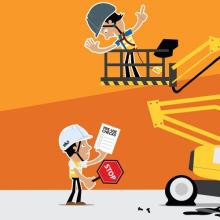
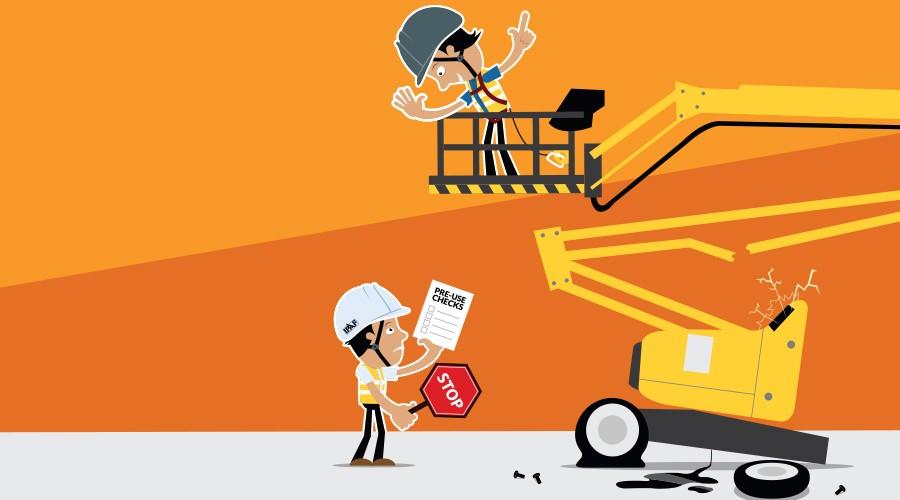
    While powered access remains one of the safest methods for performing temporary work at height, incidents involving mechanical or technical failures can still lead to serious injuries and fatalities. IPAF emphasises that many of these incidents are preventable through consistent inspection routines, proper maintenance, and adherence to safety procedures.

    Andy Access Website Graphic - A3
  • This guideline sets out recommendations to ensure that MCWPs are installed, maintained, examined and used in a safe manner.

  • IPAF Members are being offered financial assistance to help them during the ongoing pandemic. IPAF is providing a 25% discount on the 2020 membership fee against the cost of 2021 fees and is bringing forward its annual rebate for Training Centres.

  • IPAF is excited to announce that once again it will be exhibiting at the APEX Show 2026, taking place from 2–4 June 2026 at the MECC in Maastricht, Netherlands.