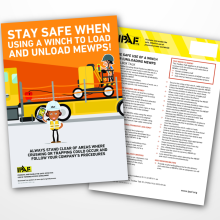
Some Mobile Elevating Work Platforms (MEWPs) are (un)loaded on vehicles and trailers with the aid of a winch; this can be for several different reasons:
- Vehicles and trailers that exceed the gradeability of the specific MEWP.
- Inclement weather conditions.
- Adherence to company safe systems of work, as a result of a job specific risk assessment.
The delivery and collection of Mobile Elevating Work Platforms (MEWPs) can sometimes be a high-risk activity if not performed correctly. IPAF recommends load/unload and IPAF demonstrator training for delivery drivers.
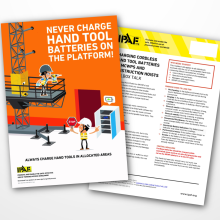
Mast Climbing Work Platforms (MCWPs) and Construction Hoists (CHs) are sometimes fitted with electrical outlets on the platform that enable operatives to use electrically powered hand tools and other equipment. IPAF does not recommend these electrical outlets are used to charge hand tool batteries.
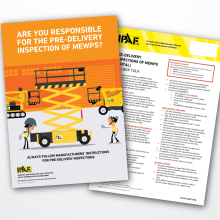
Mobile Elevating Work Platform (MEWP) rental companies should carry out a Pre-Delivery Inspection (PDI) before the equipment is made available for hire. The purpose of this is to ensure the MEWP is operating within the specified design requirements of the Original Equipment Manufacturer (OEM).
Charging batteries on electrified Mobile Elevating Work Platforms (MEWPs) should be carried out in line with the manufacturer's instructions, which can be found in the operators’ manual. Incorrect battery charging can increase the risk of fire or explosion from transformers and/or charging equipment.
The most common type of Lithium-ion (Li-ion) battery fitted to Mobile Elevating Work Platforms (MEWPs) is the Lithium Ferrophosphate (LFP) battery. The main risk from Li-ion batteries is fire or explosion, which can lead to thermal runaway.
Lead acid batteries are commonly fitted to Mobile Elevating Work Platforms (MEWPs) mainly due to their durability and relatively low cost. These batteries require frequent maintenance, including checking, and topping up of the electrolyte levels.
This Toolbox Talk provides information on the importance of selecting suitable third-party service providers and ensuring that any work completed on their equipment meets the requirements of the OEM, or, in some cases, a competent professional engineer.
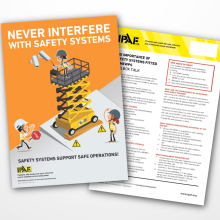
This Toolbox Talk provides information on the types of safety systems fitted to MEWPs, and the consequences that could happen if they are interfered with.
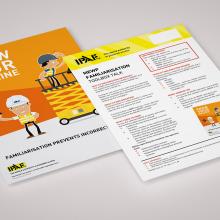
The mobile elevating work platform (MEWP) may be significantly different than the MEWP the operator was trained on. Accidents can occur from operating an unfamiliar MEWP, for example by moving the platform in the opposite direction than intended, or by incorrectly setting up the outriggers.
Mobile elevating work platforms (MEWPs) are not advertising displays. MEWPs are designed to take persons, tools and equipment within the platform to enable the occupants to work safely at height. Attaching a sign or banner to a MEWP will potentially make the MEWP unstable. This can cause an overturn and result in serious injuries to people and damage to property.
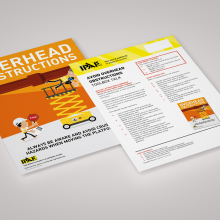
Mobile elevating work platforms (MEWPs) can be used in confined areas, or near overhead structures. When travelling or when elevated there is a risk that the operator or the platform occupant may come in contact with an overhead obstruction. This could result in crushing or entrapment of that person.
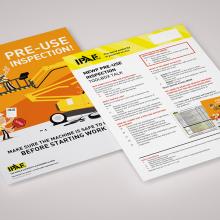
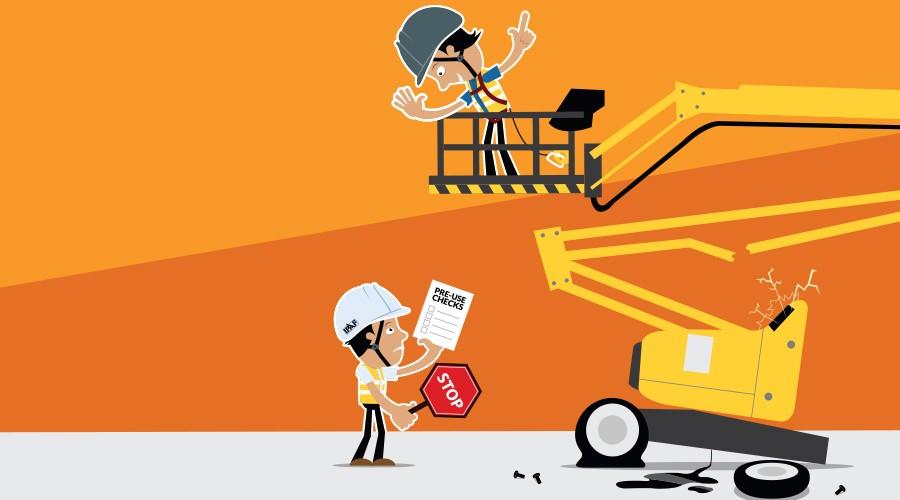
A mobile elevating work platform (MEWP) must be inspected daily or at the start of each shift to make sure it is safe to use; and will not cause an injury to the platform occupants or other personnel.
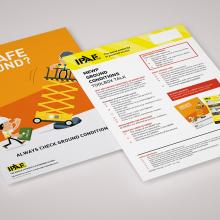
Ground conditions are critical for the stability of the mobile elevating work platform (MEWP). Unsuitable ground conditions can result in the MEWP overturning with potential loss of life.
To comply with regional legislation, standards, and best practice, a Rescue Plan should be developed, documented, and communicated before anyone operates a MEWP.
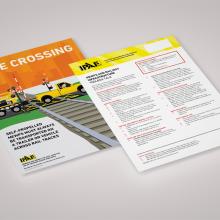
This Toolbox Talk provides information on the associated hazards and risks involved with mobile elevating work platforms (MEWPs) working near railways and crossing active and non-active rail crossings.
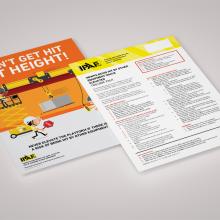
This Toolbox Talk provides information on the types of hazards that can cause collisions/impacts and suggests ways to reduce the likelihood of these incidents occurring.
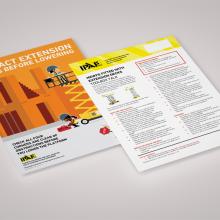
Mobile Elevating Work Platforms (MEWPs) Category 3a (e.g., scissor lifts) are sometimes fitted with extension decks, these can be single, or double deck extensions. The purpose of an extension deck is to provide additional horizontal outreach beyond the main deck of the platform.
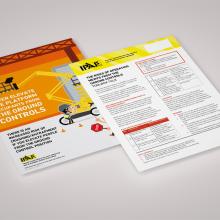
Mobile Elevating Work Platforms (MEWPs) are supplied with both ground and platform controls to comply with International MEWP design standards. Manufacturer’s operators’ manuals identify that the primary operator control station is in the platform and that the ground controls should only be used to carry out pre-use inspections without anyone in the platform, or for emergency descent purposes only.
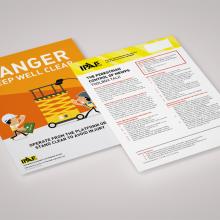
Mobile Elevating Work Platforms (MEWPs) are provided with ground and platform controls to comply with global MEWP design standards. Pedestrian control is the term used when the MEWP operator uses the platform controls from the ground by walking alongside, or in close proximity to the MEWP. This includes those that have an umbilical cord, or radio/remote, or a fixed point of control on the chassis.
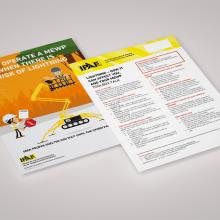
Mobile Elevating Work Platforms (MEWPs) should not be used if there is a risk of lightning. If lightning strikes a MEWP it will look for the path of least resistance to earth. This means it can travel from the platform, through the superstructure and tyres to earth. Rubber tyres do not insulate MEWPs.
While powered access remains one of the safest methods for performing temporary work at height, incidents involving mechanical or technical failures can still lead to serious injuries and fatalities. IPAF emphasises that many of these incidents are preventable through consistent inspection routines, proper maintenance, and adherence to safety procedures.