Hitachi Energy has officially become an IPAF-accredited Training Centre in Sweden, marking a significant milestone for the company and for the wider powered access industry in the region.
At the upcoming Giornate Italiane del Sollevamento (GIS) 2025, which will be held in Piacenza, Italy from 25–27 September 2025, the International Powered Access Federation (IPAF) will have a dedicated booth and a programme of initiatives designed to promote a stronger safety culture in the use of mobile elevating work platforms (MEWPs).
IPAF is pleased to announce the opening of two training centres in Greece, with the aim of supporting the country in its efforts to close the gap in occupational safety compared to European standards.
This Toolbox Talk provides information on the types of safety systems fitted to MEWPs, and the consequences that could happen if they are interfered with.
IPAF and digital learning provider Sponge have jointly won four Brandon Hall Group™ HCM Excellence Awards® for their Mobile Elevating Work Platform (MEWP) Operator Training Course. The course earned Gold awards for 'Best Advance in Learning Management Technology for Compliance Training', 'Best Compliance Training' and 'Best Unique or Innovative Learning and Development Programme', and Silver for 'Best Use of Blended Learning'.
The International Powered Access Federation (IPAF) and the Hire Industry Association of New Zealand (HIANZ) have joined forces to launch a new MEWP training conversion course for operators.
A Recovery and Rescue Plan is a procedure to lower the MEWP platform in case of an emergency, for example, an operator being incapacitated, or a breakdown.
Ground conditions and supporting structures are critical for the stability of a MEWP. Unsuitable ground or structures can result in the MEWP overturning.
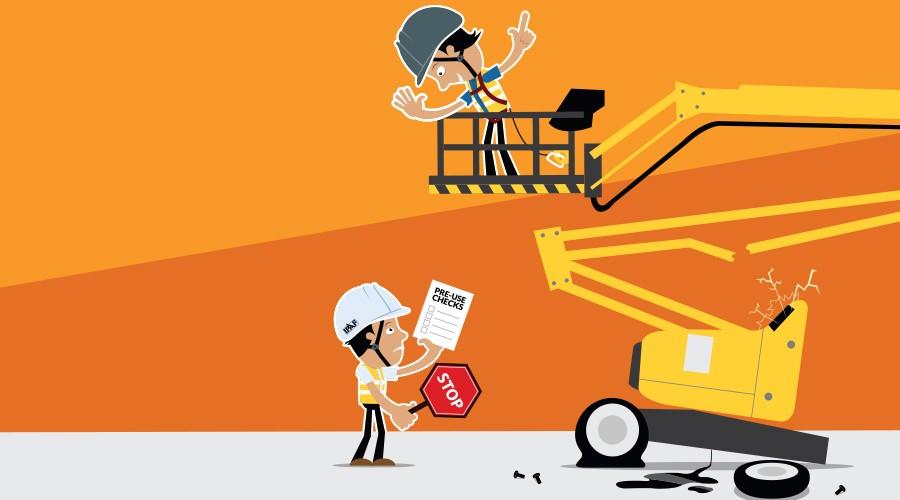
While powered access remains one of the safest methods for performing temporary work at height, incidents involving mechanical or technical failures can still lead to serious injuries and fatalities. IPAF emphasises that many of these incidents are preventable through consistent inspection routines, proper maintenance, and adherence to safety procedures.