• International Powered Access Federation (IPAF) collates incident reports received from around the world, from companies, individuals and IPAF members who share their experiences to allow others to work safer. By analyzing the data, it is evident incidents involving electrocutions and electric shocks have notably increased since 2015, the standout statistic is that reported incidents of electrocution are nearly always fatal.
    IPAF Safe Use of MEWPs in the Vicinity of Power Lines guidance COVER
  • This Toolbox Talk provides guidance for powered access rental companies on how to deal with suspected asbestos contaminated equipment when it is off-hired.

    TBT Asbestos
  • If a MEWP (Mobile Elevating Work Platform) or platform occupant contacts energised power lines it can cause, electrocution, electric shock, fire, or an explosion. The same effects can occur without contacting a power line by arcing or flashover of electrical energy to a conductor.

    Toolbox Talk A11 EN
  • RF is short for radio frequency. RF is any frequency within the electromagnetic spectrum associated with radio wave propagation. When an RF current is supplied to an antenna, an electromagnetic field is created that is able to travel, or spread through space.

    TBT A33 EN
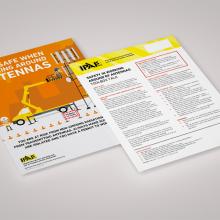
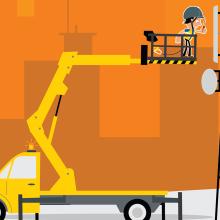
  • Stay safe when working around antennas. You are at risk from non-ionising radiation (RF) from transmitting antennas. Always make sure they are isolated and you have a permit to work.

    Andy Access A33
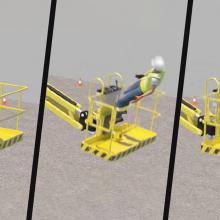
  • Be careful of the catapult effect on uneven ground.

  • You do not need to touch the power cables to be electrocuted – electricity can jump!

  • Position your MEWP correctly and always stay inside the platform guardrails with both feet on the platform floor

  • This webinar will explore how to prevent downtime of a MEWP through the implementation of an effective maintenance and inspection programme.

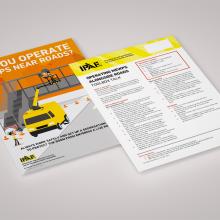
  • Do you operate MEWPs near roads? Always work safely and set up an exclusion zone to protect the boom from entering a live road.

    Andy Access A28
  • Operating MEWPs alongside roads can cause death or serious injury to operators or members of the public if the tasks are not adequately planned and machinery not positioned correctly. Due to the close working environment and proximity with other equipment, passing vehicles, buildings and pedestrians, the risk of a MEWP being impacted is significantly increased.

    Toolbox Talk A28 EN
  • INGEBORG GABRIELS
    SAFETY, HEALTH, ENVIRONMENT & QUALITY MANAGER AT RIWAL, NETHERLANDS

  • Michelle Long
    Managing Director, The UK Tool Hire Group

  • Katrine Aurora Balle
    Instructor & Training Manager, Riwal, Denmark

  • Sara Trabucchi
    Training Manager, Elevo-Kiloutou, Italy

  • Marzia Giusto
    Managing Director, Loxam, Italy

  • Tyres on Mobile Elevating Work Platforms (MEWPs) can sometimes be the only contact points between the MEWP structure and the ground and are critical to the stability of the MEWP.

    The tyres, whether solid, air filled or polyurethane foam-filled support the weight of the machine while it is in use. In certain boom configurations this can be up to 80% of the total machine weight over one tyre.

    Toolbox Talk A29 EN
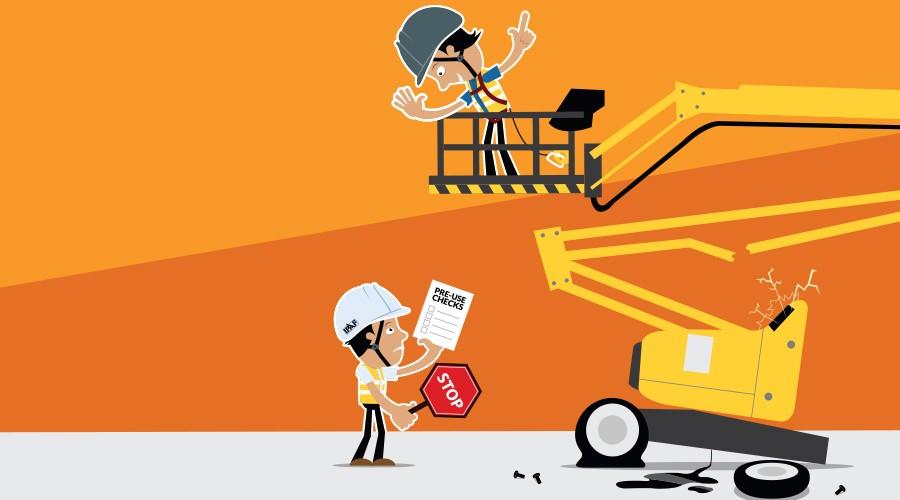
  • Are your MEWP tyres safe to use?

    Always check the condition of your tyres and wheels as part of your pre-use inspection.

    Andy Access A29
  • Technical Guidance

    MEWP Catapult Effect

    The catapult effect on a mobile elevating work platform (MEWP) occurs when stored energy or an impact to the MEWP’s superstructure causes a whiplash effect, which travels through the boom to the platform.

    MEWP Catapult Effect
  • Directives, Laws & Standards

    Obtaining CE or UKCA Certification

    UK Market Conformity Assessment Bodies & EU Notified Bodies.

  • This webinar explores the benefits of using mast climbing work platforms for facade work over other available options. Also included is an update on the MCWP HSE Safety Alert issued earlier this year by the UK Health & Safety Executive (HSE), and interpretation of the safety elements in the MCWP European regulation EN1495. Webinar sponsored by: Alimak and Maber

  • Debbie Lewis
    IPAF Independent Instructor, UK